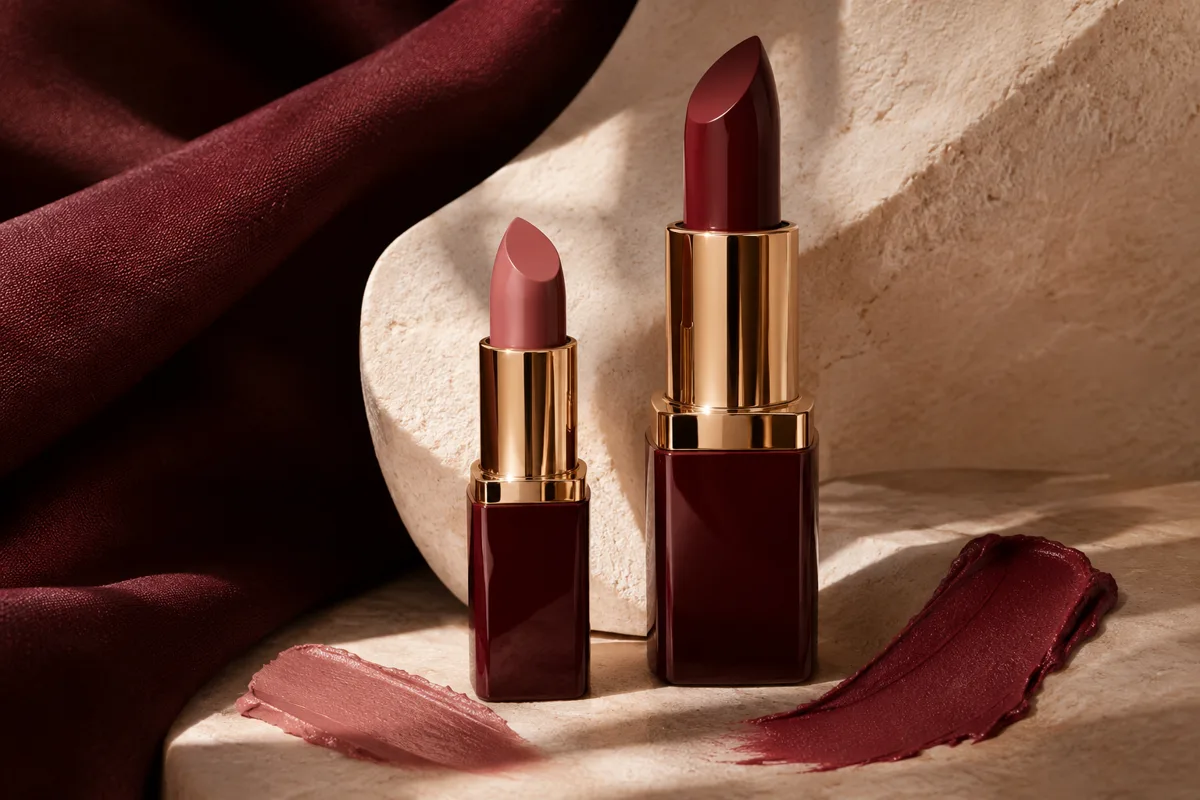
Read the net quantity precisely
A bullet may use weight ounces or grams, while a liquid may use fluid ounces or mL. The abbreviation fl oz matters. Do not read a 0.06 oz bullet and a 0.14 fl oz liquid as the same unit. Record the exact printed wording beside the price.
Use compatible comparisons
For two liquids both labeled in US fluid ounces, divide each price by its displayed volume. For two bullets both labeled in grams, use dollars per gram. Our unit-value tool keeps the unit explicit and does not invent a density conversion. Equal mass or volume still does not mean equal numbers of applications.
Compare value after fit
A large tube is not a saving if you dislike the finish or cannot use it within the manufacturer guidance. Start with the result and routine, then use the calculation to compare compatible alternatives. Shipping, immediate discounts and tax should be handled consistently across the basket.
Work a transparent hypothetical comparison
Suppose two fictional liquid products cost $12 for 4 mL and $15 for 6 mL. Their quantity costs are $3.00 and $2.50 per mL. The second has the lower unit cost, but that does not reveal which finish you prefer or how much you will use per application. Now suppose the second package says 6 g instead: the direct volume comparison is no longer valid. Those figures are teaching inputs, not sampled products or prices.
Before you decide
- Keep weight ounces and fluid ounces separate.
- Use actual checkout quantity, not package dimensions.
- Do not describe unit cost as measured cost per wear.
Sources & scope
Checked November 4, 2026. Official references support the specific product or labeling statements. Dated official US list prices appear only where explicitly stated; final checkout cost, stock and merchant eligibility can differ. Application workflows are editorial guidance, not independent testing.
Keep reading
Maybelline Matte Ink vs Vinyl Ink: finish, size and listed price ↗
Three real lip-color alternatives for three different routines ↗